
Roof valley repairs
Roof valleys carry a concentrated flow of rainwater between two roof slopes, so small defects can quickly cause a significant leak.
Try a quote requestFictional concept. No roofing service is booked.
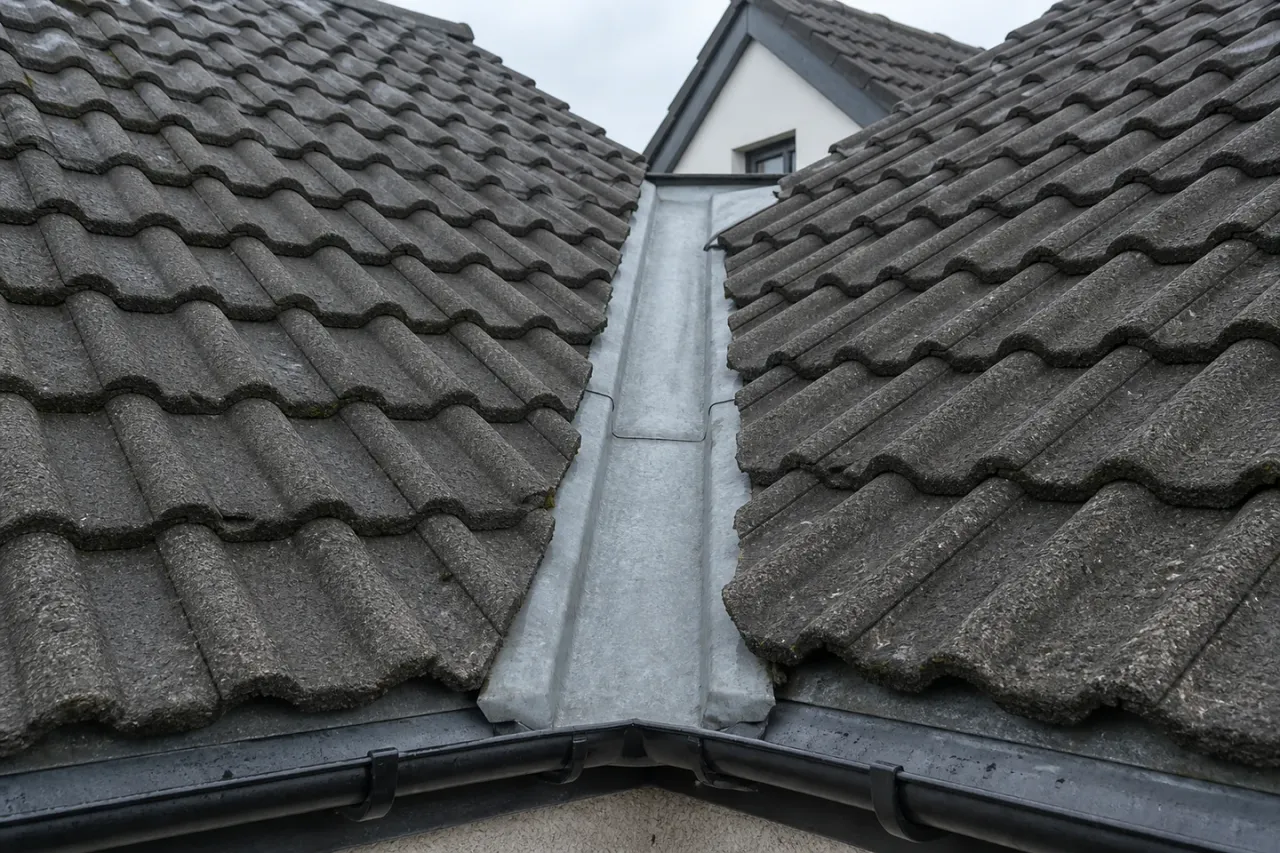
Signs worth having checked.
- Water entering along an internal roof angle
- Debris or moss collecting in the valley
- Cracked valley mortar or displaced edge tiles
- Corroded metal, split lining or a visibly shallow channel
Observe from a safe place. You do not need to access the roof to make an enquiry.
What the work may involve.
- Clearing the valley and checking the full water path
- Lifting adjacent tiles or slates for proper access
- Repair or renewal of the valley lining
- Re-bedding or mechanically fixing the adjoining roof covering
- Checking that the outlet and gutters can take the water flow
The actual work should follow an inspection and an agreed written quotation.
Where is the rainwater being held up?
The inspection should follow the valley from the upper junction to its outlet. Debris, damaged lining and adjoining tiles can each affect how it drains.
Before the inspection
Describe the internal location of the leak. Leave access to the valley and any clearance to a competent contractor.
What affects the price?
Access equipment, the extent of the fault, compatible materials and any underlying damage. Request a clear scope with exclusions, rather than relying on a price for an unseen roof.
What a clear quotation covers →Start with what you have noticed.
A leak, a loose slate or a roof ready for renewal. You do not need to diagnose the problem yourself.